

54 Years Est. 1971

Disclaimer

Please read this disclaimer carefully before using the ASCAA website or asking for advice or assistance.

All information is merely for educational and informational purposes for sickle cell anemia. It is not intended as a substitute for professional advice.

Please seek an appropriately qualified and licensed physician for medical advice. Should you decide to act upon any information given, you do so at your own risk.

While the information has been verified to the best of our abilities, we cannot guarantee that there are no mistakes or errors.

We reserve the right to change this policy at any given time, which will be promptly updated.

If you want to make sure that you are up to date with the latest changes, we advise you to frequently visit this page.

Supporting People Affected by Sickle Cell Disease

Together, We Can Beat This Disease

Affiliations

Little African Girl.

Supporting People Affected by Sickle Cell Disease

Together, We Can Beat This Disease

Sickle Cell Disease Organization That Cares About Your Health

If you or your loved one has sickle cell disease (SCD), you might feel overwhelmed and feel like you lack the resources to manage this condition. You don’t have to face the challenges of SCD on your own. The American Sickle Cell Anemia Association (ASCAA) is here to provide the support you need so you can receive proper medical care.
Our sickle cell disease organization offers counseling, diagnostic testing, and other services that help you make informed decisions about your health. We are passionate about educating others about SCD and keeping people informed about sickle cell disease treatment options. Learn more about our organization and the people running it.
African Family
Children Smiling Together

Mission Statement

ASCAA is a comprehensive health organization whose mission is to connect with families, inspire hope, and improve their quality of life. We are ultimately working to create a world without sickle cell disease.
Children Smiling Together

Mission Statement

ASCAA is a comprehensive health organization whose mission is to connect with families, inspire hope, and improve their quality of life. We are ultimately working to create a world without sickle cell disease.

Donate to our organization and help make a difference.
What Is Sickle Cell Disease and Sickle Cell Trait?

Sickle Cell Disease (SCD)

Growth Sickle Disease

Sickle cell disease refers to a group of inherited disorders of the red blood cell, and it is one of the most widespread genetic disorders in the United States.

It is most common among Black or African American individuals in the U.S. However, people with heritage from the following areas may also be affected:

  • Sub-Saharan Africa
  • Spanish-Speaking Regions in the Western Hemisphere (South America, the Caribbean, and Central America)
  • The Middle
  • India
  • Mediterranean Countries (Turkey, Greece, and Italy)
According to the Centers for Disease Control and Prevention, around one in every 365 African American babies is born with SCD in the U.S. Furthermore, approximately 300,000 babies are born with SCD each year worldwide.
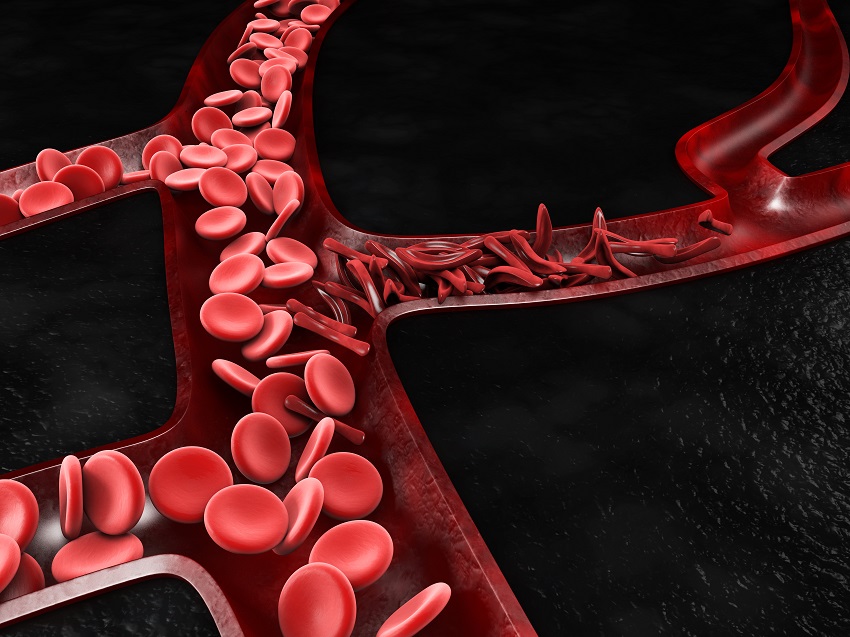
Hemoglobin SS (Hb SS) is the most common type of sickle cell disease. In this disorder, some of the red blood cells are crescent- or sickle-shaped. These abnormally shaped cells have a shorter lifespan than normal red blood cells, and they have a tendency to get stuck in blood vessels and block the flow of blood to certain parts of the body. If the condition is left untreated, there is a risk of anemia, organ damage, or even death. However, if Hb SS is identified early in life and treated immediately, individuals can lead healthier lives.

Sickle Cell Trait (SCT)

Sickle cell trait is not a mild form of SCD. When a person has SCT, they carry a single gene for SCD and can pass this gene along to their children. People who have SCT usually don’t show any of the symptoms of SCD and can live life normally.
Hemoglobin is found in red blood cells, and it gives blood its color. It delivers oxygen to all parts of the body. Hemoglobin is made from alpha-globin and beta-globin, which are two similar proteins that “stick together.” Both of these proteins must be present and function normally for the hemoglobin to carry out its job in the body.
People who have SCT possess red blood cells with normal hemoglobin and abnormal hemoglobin. Genes are the instructions that control how red blood cells make alpha- and beta-globin proteins. All people have two genes for making beta-globin. They get one beta-globin gene from each parent. SCT occurs when a person inherits a gene for sickle beta-globin from one parent and a gene for normal beta-globin from the other parent. This means the person will not have sickle cell disease but will be a trait “carrier” and can pass it on to their children.

Chances of Having SCT or SCD

If both parents have SCT, each child that they have together has a:
If one parent has SCT and the other parent has another abnormal hemoglobin gene (like hemoglobin C trait or beta thalassemia trait), each of their children has a:
If only one parent has SCT, each of their children has a:
If both parents have SCT, each child that they have together has a:
If one parent has SCT and the other parent has another abnormal hemoglobin gene (like hemoglobin C trait or beta thalassemia trait), each of their children has a:
If only one parent has SCT, each of their children has a:

Sickle Cell Trait and Athletes

Compared to those without SCT, some people who have this condition are more likely to experience heat stroke and muscle breakdown when performing intense physical activities such as competitive sports or military training under extreme temperatures or conditions.
Some studies show that you can reduce the chance of this problem occurring by avoiding dehydration and getting too hot during training. People with SCT who participate in competitive or team sports (i.e., student-athletes) should be careful when training or doing conditioning activities.
People Training

What to Do to Prevent Illness:

  • Set your own pace and gradually increase the intensity.
  • Take the time to rest in between repetitive sets and drills.
  • Drink plenty of water before, during, and after training and conditioning activities.
  • Mist the body with water or go to an air-conditioned area during breaks or rest periods.
  • Seek medical care immediately when you feel ill.

Gene Therapy

Gene Therapy vs BMT

Understanding Gene Therapy

Understanding Gene Therapy - CHILDRENS

Rabi Hanna, MD

Chairman, Pediatric Hematology-Oncology & BMT Division
Associate Professor, CCLCM of Case Western Reserve University